
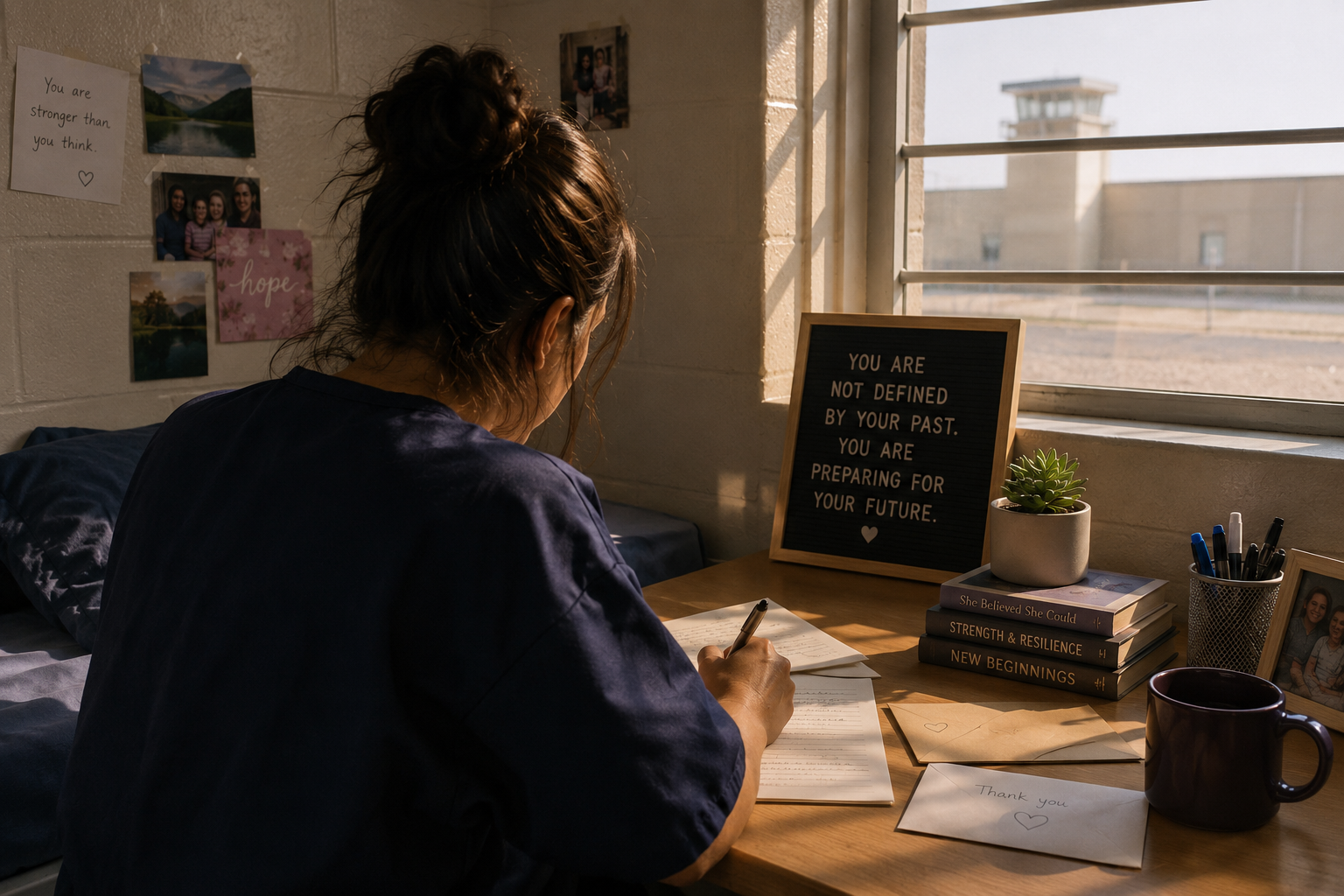
A Smaller Population Facing a Bigger Gap
Women represent a smaller share of the overall incarcerated population, yet that smaller number creates its own distinct set of challenges. Fewer facilities house women specifically, which often means longer distances between an incarcerated woman and her family back home, and fewer people searching specifically for pen pals for women in prison. That distance translates directly into fewer visits, fewer phone calls, and a deeper sense of isolation than many people realize.
Women inmate pen pals exist precisely because this particular gap in connection rarely gets the attention it deserves. Outside support systems for incarcerated men receive more visibility, more funding, and more public awareness than equivalent support for women. Therefore, the need for genuine correspondence among incarcerated women remains just as urgent, even if it stays comparatively overlooked.
Why Isolation Hits Differently For Women
Many incarcerated women served as primary caregivers before their sentencing, often raising children or supporting aging parents. That sudden separation creates a particular kind of grief layered on top of the isolation already inherent to incarceration itself. Besides this, fewer family members may remain willing or able to maintain contact once that caregiving role disappears.
The Numbers Behind The Need
Research on incarcerated populations consistently shows that women report higher rates of family disconnection following sentencing than men do. Nonetheless, public conversation around prison reform rarely centers on women's specific experiences with the same depth as it does for men. This gap in attention is exactly why female prison pen pals matter as much as they do.
What Correspondence Offers That Other Support Cannot
A letter cannot replace family, freedom, or the life someone had before incarceration, yet it offers something genuinely valuable. Consistent correspondence provides a reminder that the outside world has not entirely forgotten someone simply because circumstances have changed. Therefore, even occasional letters carry weight far beyond their modest length or frequency.
Building Confidence Through Connection
Many women report that correspondence helped rebuild a sense of identity beyond whatever led to their incarceration in the first place. Nonetheless, this rebuilding happens gradually, through ordinary conversation rather than anything dramatic or therapeutic in nature. Simple, consistent exchanges often prove more meaningful than grand gestures ever could.
Understanding What Women Are Often Looking For
Many incarcerated women frequently mention wanting genuine friendship rather than romantic attention or one-sided support. Profiles often highlight interests like reading, art, fitness, or personal growth, much like anyone else describing themselves to a stranger. Approaching correspondence with that same ordinary curiosity tends to produce the most respectful, rewarding connections.
Avoiding Common Assumptions
Some newcomers assume incarcerated women primarily seek financial help or romantic involvement, yet this assumption rarely matches reality. However, most simply want conversation, consistency, and the basic dignity of being treated as a whole person. Approaching correspondence with this understanding generally leads to far more genuine, lasting connections.
The Ripple Effect Of A Single Letter
A single letter rarely changes an entire situation, yet its effect tends to ripple outward in ways the writer never witnesses directly. Confidence built through correspondence often spills into other parts of someone's daily life, including how they interact with staff or other residents. Therefore, the impact of female prison pen pals' correspondence frequently extends well beyond the letters themselves.
Why Small Gestures Compound Over Time
A single letter feels modest, yet repeated over months, that modest gesture becomes something closer to a steady source of stability. Nonetheless, this compounding effect rarely happens overnight, since trust and routine both take genuine time to develop. Writers who stay patient through this gradual process tend to witness the most meaningful, lasting change.
Female Incarcerated Pen Pals And The Power Of Consistency
Consistency matters more in these relationships than eloquence, length, or frequency of letters ever could. A short note sent reliably tends to mean more than an occasional lengthy letter sent unpredictably. Therefore, setting a sustainable pace from the beginning protects the relationship from feeling like an obligation rather than a genuine friendship.
Why Reliability Builds Trust
Female incarcerated pen pals, much like anyone facing isolation, value predictability as much as warmth within a correspondence. Nonetheless, life circumstances on both sides sometimes interrupt that rhythm, and that interruption rarely reflects a lack of genuine care. Returning to the correspondence after a pause, rather than abandoning it entirely, tends to preserve the trust already built.
How Friends4Prisoners Supports Women Seeking Connection
Friends4Prisoners maintains profiles specifically representing incarcerated women hoping to build genuine, lasting correspondence with someone new. The platform makes it simple to find female prison pen pals whose interests and personalities genuinely resonate with potential writers.