
What People Imagine Versus What Actually Happens
Most newcomers picture something dramatic before sending their first letter, manipulation, danger, or some hidden agenda waiting on the other end. Reality looks far less cinematic than that imagination suggests, and most correspondence unfolds exactly as ordinary as any new friendship would. Understanding that gap between fear and fact matters more than almost anything else before someone decides to write to prisoners safely.
This guide exists to separate genuine caution from exaggerated worry, since both extremes can lead someone astray. An inmate pen pal relationship, like any relationship, carries some risk, yet that risk rarely matches the dramatic version imagined beforehand. Knowing where real caution belongs allows newcomers to participate confidently rather than anxiously.
Myth One, Facilities Do Not Monitor Mail
Many people assume letters travel freely between the outside world and a facility without any oversight whatsoever. In truth, correctional facilities review both incoming and outgoing mail as standard procedure across nearly every institution. This screening process exists specifically to catch anything inappropriate before a letter ever reaches its intended recipient.
Why This Matters For Newcomers
Knowing that oversight exists tends to ease much of the initial anxiety many people feel before writing their first letter. Therefore, the system itself provides a built in layer of protection that many newcomers simply do not realize exists. This reality alone resolves much of the fear surrounding an inmate pen pal correspondence.
Myth Two, Every Pen Pal Wants Something From You
Skepticism toward motives is reasonable, yet assuming bad intent in every case paints an inaccurate picture of most participants. Most individuals seeking correspondence through any inmate correspondence program simply want connection, conversation, and a reminder that someone outside remembers them. Nontheless, healthy caution still has a place, particularly around financial requests or pressure to escalate the relationship quickly.
Recognizing Genuine Red Flags
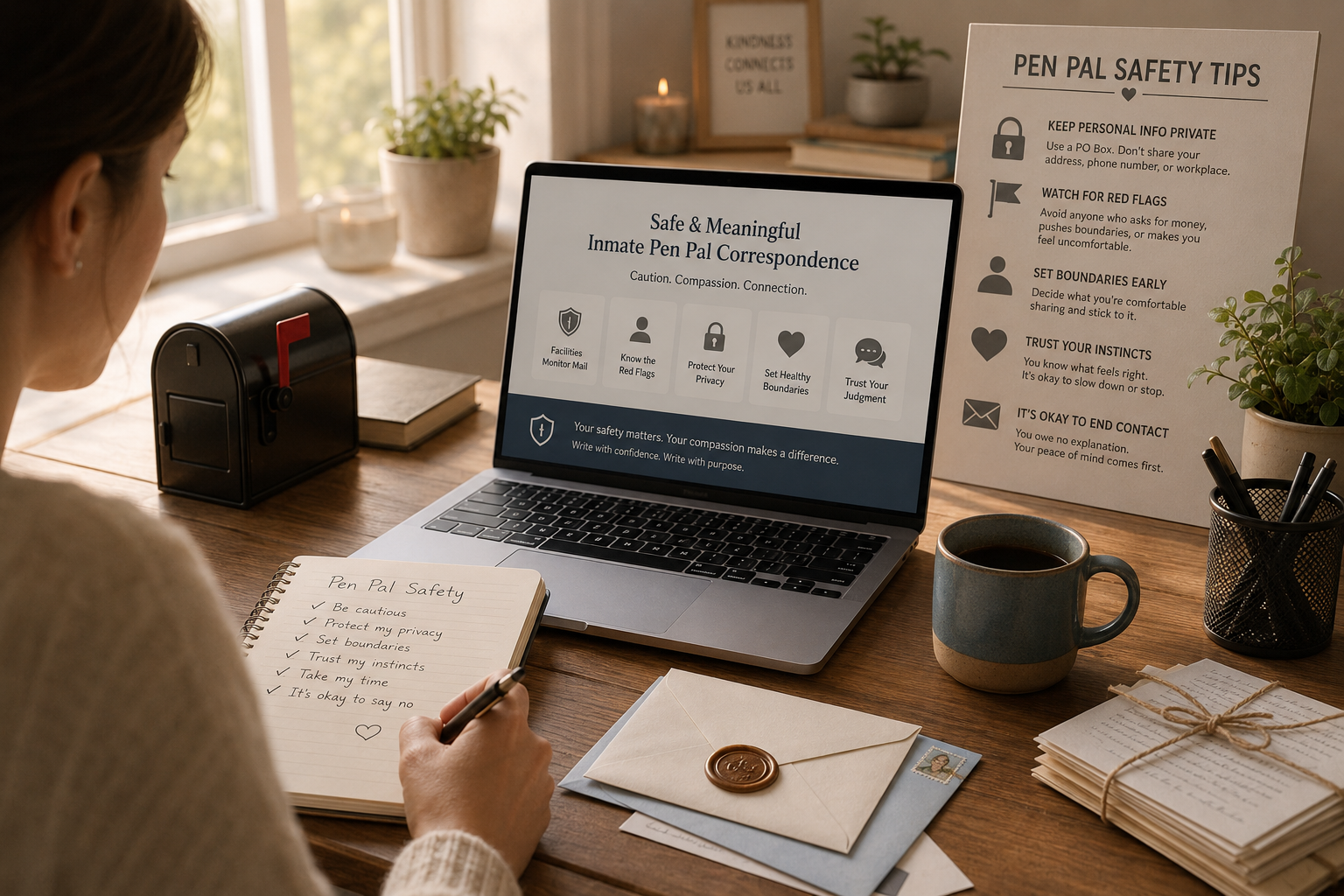
Persistent requests for money, pressure for an in person visit too early, or refusal to respect stated boundaries all warrant real concern. However, these patterns represent the exception rather than the norm within most correspondence experiences. Trusting your own instincts, while staying aware of these specific warning signs, offers the most balanced approach.
Why Caution And Compassion Can Coexist
Some newcomers worry that staying cautious somehow contradicts the compassion that drew them to this experience in the first place. That worry rarely holds up under closer thought, since caution and compassion serve entirely different purposes within the same relationship. One protects you, while the other shapes how genuinely you show up for someone else.
Balancing Both Without Overthinking
Reasonable caution looks like keeping personal details private and noticing patterns rather than assuming the worst from every interaction. Therefore, a thoughtful pen pal can remain warm and open while still maintaining sensible boundaries throughout the relationship. Most experienced participants describe this balance as something that becomes far more natural after the first few letters are exchanged.
Practical Steps For Protecting Your Own Privacy
Sharing a home address feels risky to many newcomers, and that instinct is worth honoring rather than dismissing. Using a PO box or a dedicated mailing address keeps personal information separate from any new correspondence. Besides this, limiting details like workplace location or daily routines early on protects privacy without sacrificing genuine connection.
Setting Boundaries From The Start
Clear boundaries established early tend to prevent most misunderstandings before they ever have a chance to develop. Therefore, stating preferences about topics, frequency, or future expectations openly helps both people feel respected throughout the correspondence. An inmate pen pal who respects those boundaries from the outset is generally signaling a healthier, more sustainable relationship.
When To Pause Or End A Correspondence
Ending contact is always a reasonable choice if a relationship begins feeling uncomfortable or one-sided. Nonetheless, most people find this decision easier than expected once they recognize it requires no lengthy explanation or justification. A simple, respectful closing letter is generally sufficient to end any correspondence that no longer feels right.
Trusting Your Own Judgment
Nobody knows a correspondence better than the two people actually writing the letters themselves. Therefore, external opinions matter less than your own honest assessment of how the relationship genuinely feels over time. Confidence in that judgment tends to grow the more experience someone naturally gains with letter writing.
How Friends4Prisoners Supports Safe Correspondence
Friends4Prisoners provides clear guidelines designed to help writers approach this experience with informed confidence rather than unnecessary fear. The platform encourages thoughtful, respectful correspondence while offering practical advice for anyone new to writing letters like these.