
You sealed the envelope and dropped it in the mail. Now comes the hardest part—waiting.
Prison mail doesn't move like regular mail. There's no tracking number. No way to know if it arrived. Most people have no idea how long this actually takes, and that confusion leads to panic when weeks pass without a response from your prisoner pen pal. But knowing the real timeline? That stops the worry and helps you understand what's actually happening behind the fence.
Prison Mail Gets Screened Before Delivery
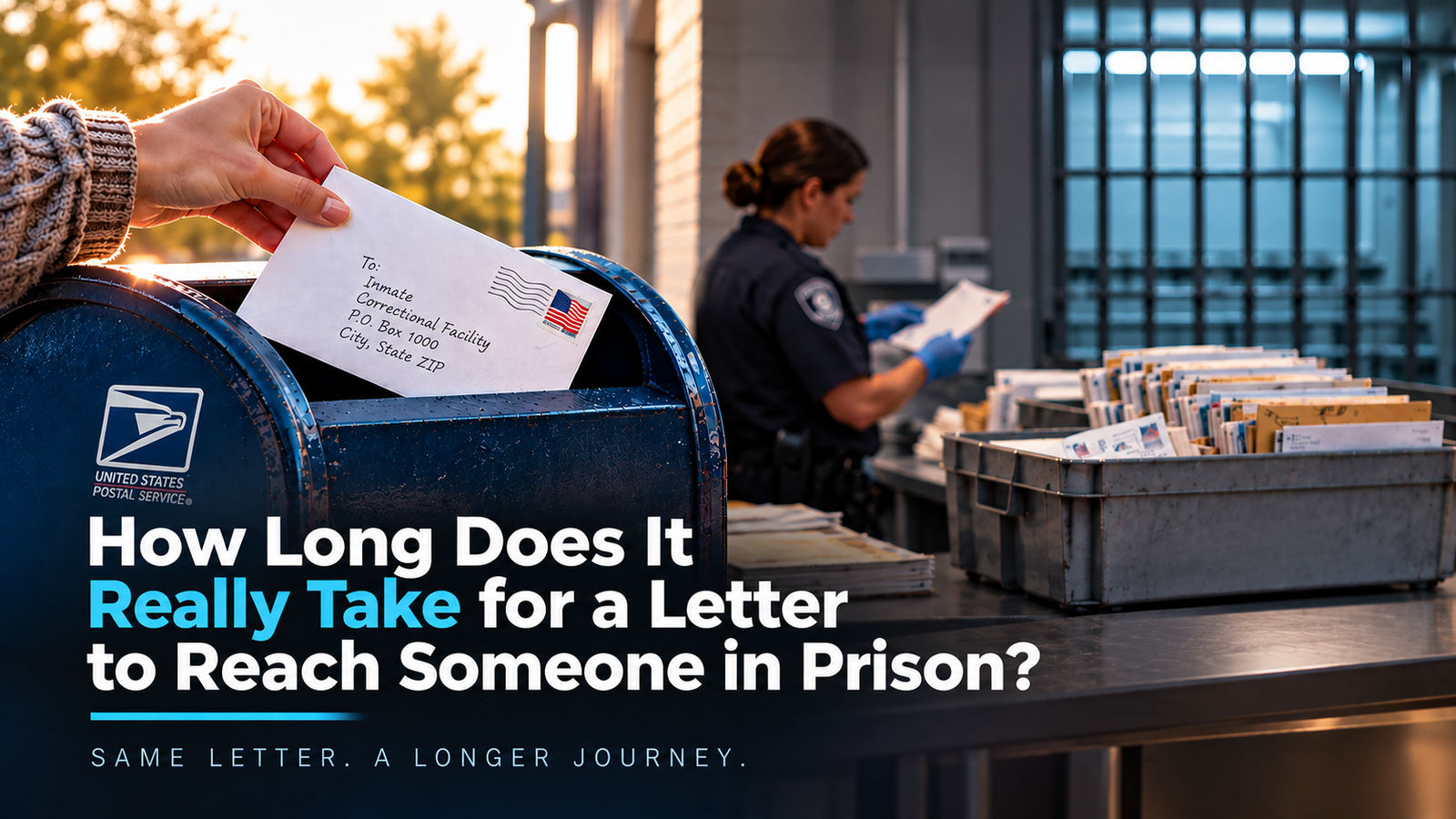
When a letter arrives at a prison facility, it doesn't go straight to the inmate. It enters a mail room where staff open and read everything. This screening takes time. Some facilities screen within days. Others take weeks. Your letter might sit with dozens of others waiting for review. Staff check for contraband, verify addresses, and confirm the person is still incarcerated there. Each step adds days to delivery.
The Screening Wait Can Be Weeks
Facilities with fewer staff process mail slowly. Letters get rejected for wrong address format or postage issues. When that happens, it's destroyed or sent back. You won't always know. The pen pal doesn't know you sent it. This is why inmate letter writing requires patience.
Real Timeline for Prison Mail Delivery
Your letter travels through several stages. First, regular postal service takes 3-5 days. Second, mail room intake logs it and confirms the recipient exists. Third, screening staff read the content and check for violations. Fourth, delivery to the cell. In total? Two to four weeks is standard. Max security prisons can take six to eight weeks.
Delays Happen at Every Stage
Winter storms slow postal delivery. Staffing shortages mean mail piles up. System lockdowns pause all activities. Holidays back everything up. The pen pal gets moved to a different housing unit—mail gets delayed again. None of these are personal. They're just how the system works. When you know the real timeline, you stop wondering if something's wrong.
How Do You Address a Letter to an Inmate?
Getting the address format right matters. Mail with wrong inmate numbers or incomplete information gets rejected. The format varies by prison, but generally you need: inmate's full legal name, inmate number (if you have it), facility name, facility address, and state. Some facilities want mail sent to a specific mail room department. Check the facility's website or contact them directly—don't guess. Pen pals write back on their address information for exactly this reason.
Double-Check Every Detail
One wrong digit in the inmate number sends it back. The wrong street address gets it returned. Misspelled facility names create delays. How do you address a letter to an inmate correctly? Use exactly what they give you. Don't abbreviate. Just copy it word for word.
Other Delays You Should Know About
Inmates sometimes refuse mail. They get transferred and mail gets rerouted. Addresses change without notice. A letter arrives at an empty cell. These things happen frequently. None means the connection is broken. A letter disappears from the system occasionally. Mail gets misfiled. You send something, they never receive it, and you have no way of knowing. It's frustrating. But it's also normal inside prison. This is why Friends4Prisoners connects people who understand these realities.
Prison Mail Has Its Own Timeline
Prison mail moves slowly, and two to four weeks is normal. Delays happen everywhere in the system. None of it means the connection is broken. When you know what to expect, you stop imagining catastrophes and start actually building something real. Understanding the timeline means you can trust the process, and that trust is what platforms like Friends4Prisoners are built on. The timeline isn't broken. It's just how the system works.