
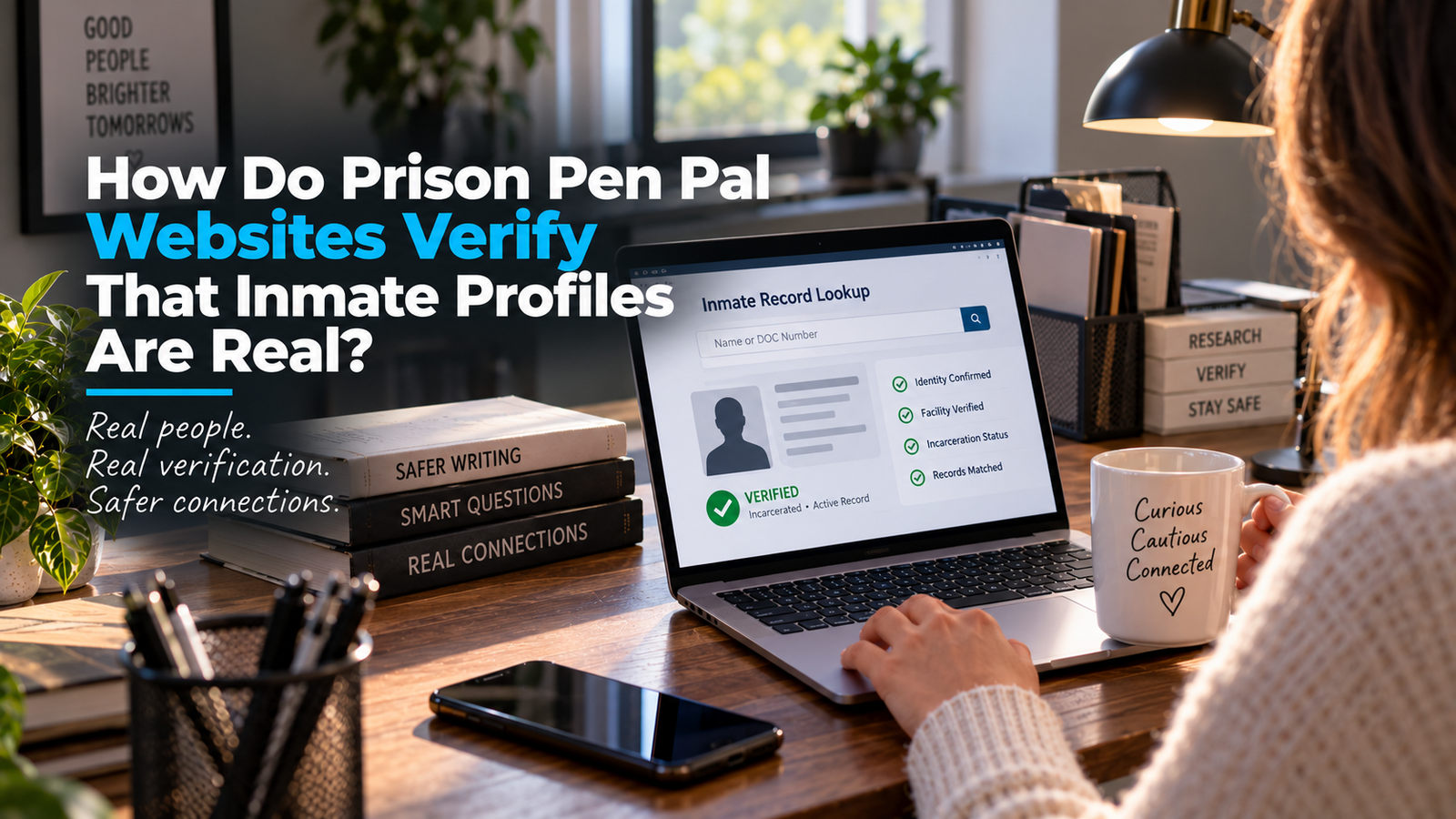
Not every profile you see on a prison pen pal website is authentic. Some are scams; some are fake. Prison pen pal verification means how legitimate websites protect you. They verify against institutional records, cross-check information, and use background screening to confirm someone is actually incarcerated where they claim. Not all websites verify equally. Some barely check at all. Others run detailed institutional checks on every profile. Knowing the difference protects you before you ever write your first letter.
Are Inmate Pen Pal Profiles Real?
How Websites Verify Prisoner Identity
The verification process starts with the prisoner's claim, including name, DOC number, and facility. A legitimate website doesn't accept this at face value. They cross-reference against actual prison records. They confirm the facility exists and the person is actually imprisoned there. Some platforms call facilities directly. Others use automated systems that access public inmate databases. Both take time and money. Websites that skip this step are cutting corners on your safety.
Background Screening and Flag Systems
Thorough websites run background checks on profiles to look for red flags. Known scammers? Pattern of targeting specific demographics? Multiple accounts from the same person? Systems catch these. The inmate pen pal profiles on legitimate sites verify as authentic. The ones on weak platforms don't always.
Ongoing Monitoring and Updates
Legitimate websites monitor accounts after launch. They check for sudden changes in profile information. They track release dates and remove profiles when someone is released. They respond to user complaints about predatory behavior. Some employ dedicated monitoring staff. Others use community reporting systems. Both require resources. Platforms that do neither aren't prioritizing your safety.
Safest Prison Pen Pal Website Practices
What Legitimate Verification Looks Like
The safest prison pen pal website systems are transparent. They explain what they verify. They display DOC numbers and facilities. They make information searchable against public records. They have clear policies about what happens if a profile is fake and how quickly they respond to safety concerns, so read these policies very carefully. If a website won't explain their verification process, that's a red flag.
Security Measures Beyond Verification
Legitimate websites implement multiple safeguards beyond initial verification:
- Messaging filters: Screening for scam language
- Data encryption: Protecting your information
- Privacy controls: Choosing who contacts you
- Blocking tools: Reporting fake profiles
- User education: Explaining red flags
The safest platform offers all of these. If a website only does basic verification, it's cutting corners.
Red Flags in Profile Claims
Even verified profiles can hide issues. Watch for prisoners who request money immediately, ask for personal details early, claim innocence despite clear records, use excessive flattery, discourage you from researching their case, or claim their profile was "hacked." These patterns suggest manipulation, even on solid verification platforms.
The Reality of Prison Pen Pal Authenticity
A trustworthy platform doesn't cut corners on verification. They invest in institutional cross-checks, background screening, and ongoing monitoring. That commitment, to keeping you protected, separates trustworthy platforms from careless ones. Your choice of where to write matters as much as who you write to. When you choose a platform like Friends4Prisoners that prioritizes rigorous verification, you're choosing to build something real. Real connections only work when both people are who they claim to be, and that foundation is everything.