
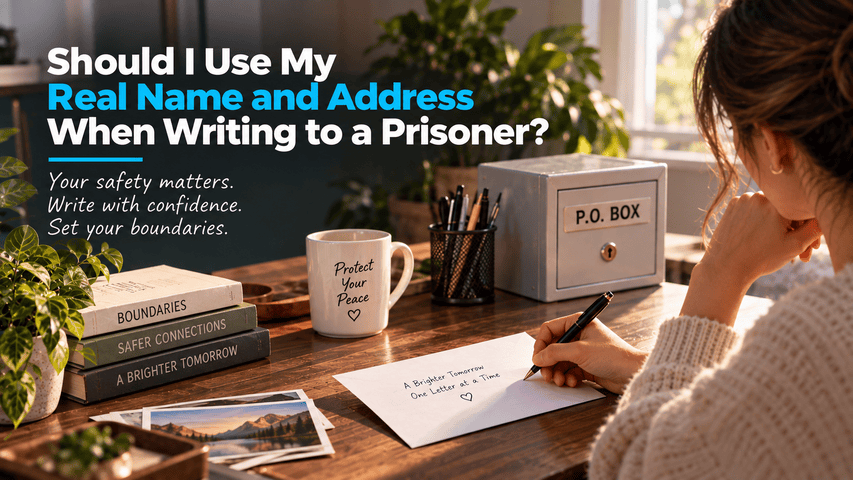
You're sitting with pen in hand, envelope already sealed. Then it hits you, should I really put my real name on this? My actual address? The moment of doubt is real for most women who write to prisoners. That hesitation isn't paranoia, it's wisdom asking a crucial question. Prison pen pal privacy isn't about being cold or distrustful. It's about understanding what happens once your name and address leave your hands. They become permanent. They enter a system. They belong to someone incarcerated, to prison staff, sometimes to records you'll never fully control.
Before you mail anything, you need to know the difference between being authentic and being vulnerable.
Safe Address for Prison Pen Pals
Real Name: The Pros and Cons
Using your real name sounds authentic. It signals honesty and builds trust. Incarcerated people appreciate directness, they get lied to constantly.
But here's what you need to know: your real name becomes searchable. Some prisoners use real names to find people on social media, cross-reference information, and build a profile. They can contact people in your life. None of this is paranoia. It's a documented pattern.
You can be honest without being completely exposed. A first name + last initial works. "Sarah M." is truthful but offers privacy. You're not deceiving them. You're protecting yourself.
Real Address: The Actual Risk
Giving a real home address means your address enters the prison mail system. Multiple people see it. It appears on every piece of mail you send. It could be shared with other prisoners or used after release. Someone knows exactly where you live.
A safe address for prison pen pals means choosing privacy over convenience. Many women use PO boxes specifically for this. It costs $200-300 per year, your insurance against someone showing up at your door.
Prison Pen Pal Safety Tips for Women
Privacy Protection Strategies
Women face specific vulnerabilities when writing to prisoners. You're more likely to be targeted for manipulation. You're more likely to be located. You're more likely to face unwanted contact after release.
Here are practical steps:
- Use a filtered name: First name only, or first name + initial (honest but private)
- Get a PO box: Send all mail from there, not your home
- Use a secondary email: Create one just for prisoner correspondence
- Don't share social media: Ever. They will find you and contact your friends
- Never send a photo early: Especially not one showing your background/location
- Don't mention your workplace: Locations, company names, or schedules become searchable
- Tell someone you trust: Where you're writing, who you're writing to, and any changes
These aren't paranoid. They're protective. Real connection requires safety first, and you can't build that if you're constantly anxious about what you've shared.
When to Reconsider Completely
Some prisoners shouldn't get your real information at all. If they pressure you for details. If they manipulate you into sharing. If they isolate you from friends. If they ask for money. If they've shown predatory patterns.
Prison pen pal safety tips for women include knowing when to stop. Your boundaries aren't rejection. They're surviving.
The Real Answer to Your Question
Should you use your real name and address? It depends on what kind of relationship you want to build. The strongest pen pal connections don't start with blind trust. They start with boundaries. Your choice about what you share isn't a rejection of the person you're writing to. It's a statement about what you value. Friends4Prisoners believes in authentic connection, and that means both people feel safe. When you protect your information, you're not being paranoid. You're being intentional. And intentional relationships last. That's the real answer to this question.