
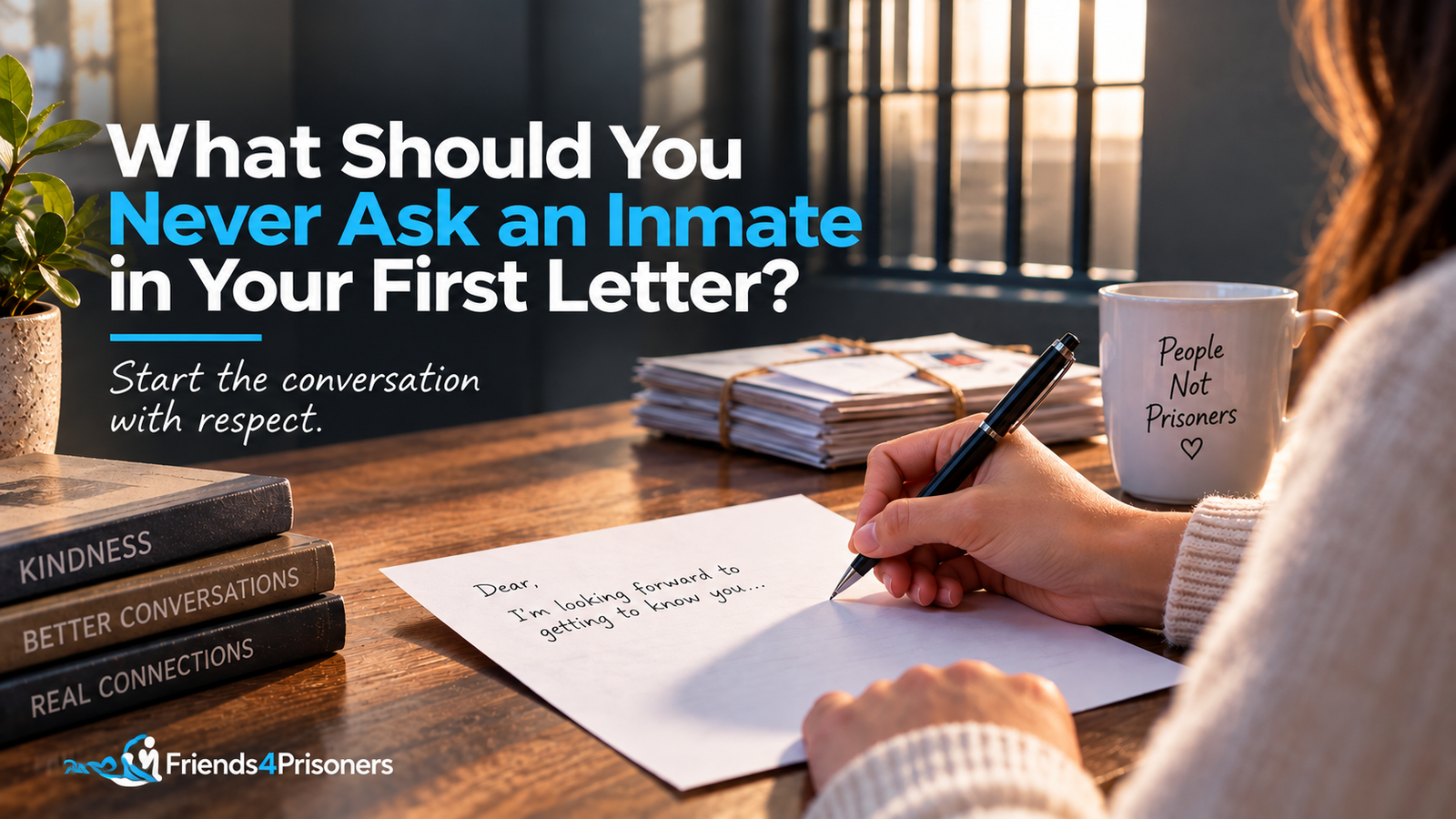
Your first letter sets the tone for the whole connection with an inmate. Most pen pals mean well but end up asking stuff that wounds people, they put someone in a position where they can't win. When you write an inmate, you need to know what NOT to say. This matters way more than people realize. Good boundaries protect both of you.
Incarcerated people answer the same hard questions over and over. From court hearings to family visits to random strangers who treat them like a curiosity. Your first letter is your one shot to be someone different. Someone who respects them without needing them to defend themselves. That builds trust fast. It tells them you see a human, not a headline.
Questions to Avoid Asking an Inmate
Their Crime
Don't ask about their crime. Not what they did, not trial details, not whether they're innocent. These questions crush people. They're exhausted from explaining themselves, to lawyers, to judges, to people who judged them without listening.
When you write to a prisoner for the first time, your letter isn't interrogation. Asking about their crime tells them you want the scandal, the story that shocked people. You're not interested in who they are now. If they want to open up later about their conviction, they will. That's on their timeline. Your job in the first letter is proving you're different.
Family and Relationships
Don't ask why their family doesn't visit. Family dynamics in prison destroy people. Some have been abandoned for years. Some have family visiting weekly but don't write letters back. Some cut contact themselves because it hurt too much. Asking about this puts them on the spot, and they have to explain their pain. Let them decide what this connection is.
Safety and Trauma
Skip asking if they've been hurt or assaulted. People who've experienced violence in prison carry that trauma daily. Your question doesn't open dialogue, it reopens wounds. Plus it reads like you're collecting stories for entertainment instead of actually wanting to know them. First letters should stay present-focused. Ask about now, not survival.
Personal Health
Don't dig into medication or mental health. Don't ask if they struggled with addiction before prison. Don't ask if they've thought about harming themselves. These topics are off-limits until real trust exists. Asking these questions early signals you see a patient or a case study, not a real human. It makes them feel diagnosed instead of known.
What to Write A Prisoner Instead
Shift your focus to who they are right now, and skip the backstory. Real connection forms when you're genuinely curious about their actual life:
- What they read or listen to: What books grab them? What music plays on repeat in their head?
- Creative stuff they do: Do they write? Draw? Make anything with their hands?
- What they're actually good at: Skills they have or are building right now?
- How they survive day-to-day: What keeps them sane? Exercise, art, routines, humor?
- What they imagine after: What's one thing they daydream about post-release?
- A good memory they hold: Any place or moment that mattered before all this?
- What actually matters to them: Core values, what they stand for as a person?
These questions work because they treat someone as a full human.
Start With Respect and Genuine Interest
Every single question shapes the relationship. Questions to avoid asking an inmate aren't just etiquette. They prove you respect them. They show incarcerated people you see them as humans who deserve dignity, not problems to fix or stories to exploit. That respect is what Friends4Prisoners stands for. Your first letter builds that foundation. Skip the harmful questions, ask the real ones. That's what respect looks like.